Dental clinic
Bookings, reminders and reviews in one flow, so chairs stay full and patients come back.
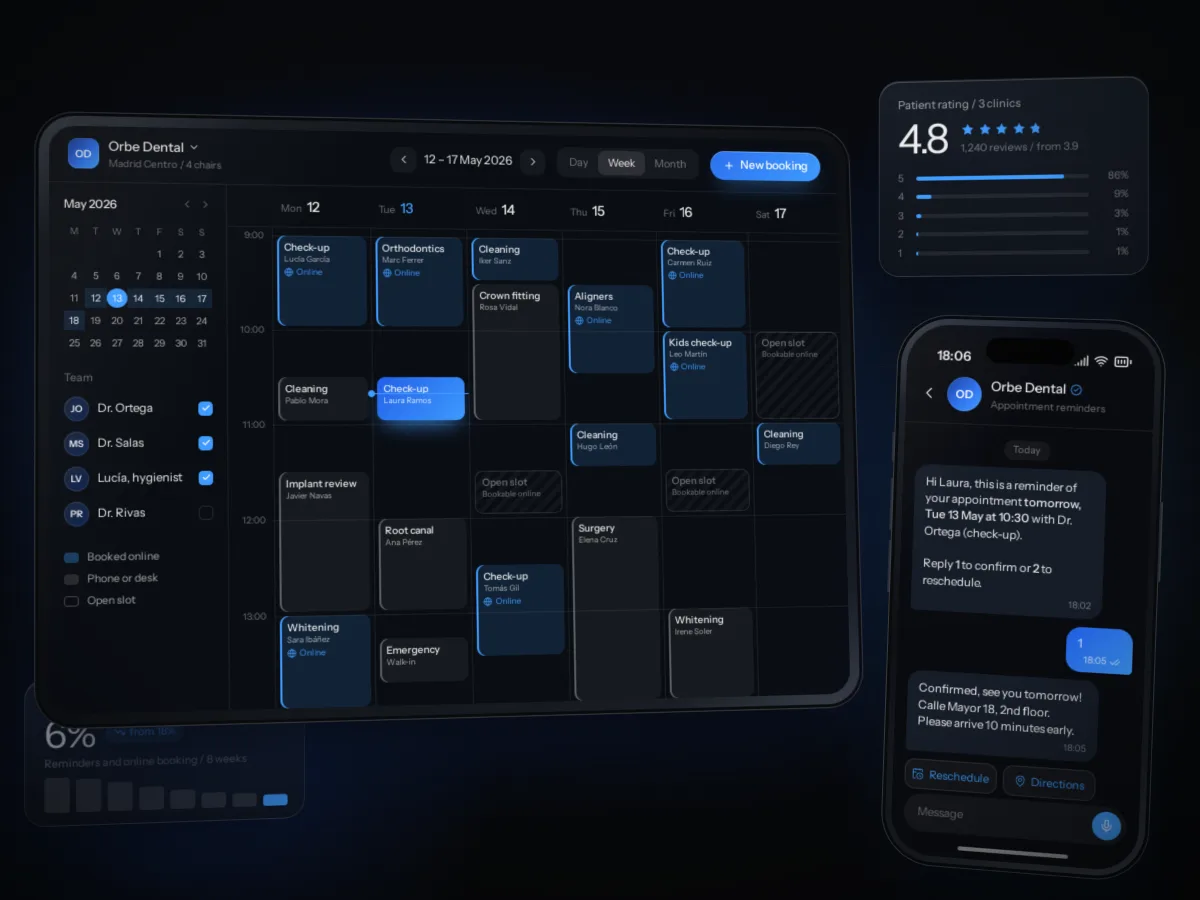
Situation and baseline
A multi-chair clinic manages appointments across phone, a booking tool and staff calendars. Routine changes require calls, reminders are inconsistent, and reception reconciles duplicate or missed follow-ups.
The challenge
Improve access and attendance without making clinical decisions, exposing health data unnecessarily or trapping patients in automation.
Approach and timeline
Diagnose
Map enquiry, booking, reminder, cancellation and recall; identify access needs, urgent routes and minimum necessary data.
Design
Present appointment types and availability clearly, then test booking and change flows with patients and reception staff.
Integrate
Configure consented confirmations and reminders with secure links, contact alternatives and controlled retry rules.
Learn and refine
Compare equivalent appointment types and periods, feedback and workload before changing reminder cadence.
Agents, automations and stack
Scheduling automation handles availability and approved reminders. An assistant answers administrative questions from clinic-approved information and routes symptoms, treatment and urgent needs to staff. Clinical records stay outside marketing and general-purpose agent systems.
Deliverables
- Patient journey and data-flow map
- Accessible booking, reminder rules and escalation review
Outcome indicators
- Late cancellation rate
Baseline: 18% Target: 6%
- Self-service booking share
Baseline: — Target: 58%
- Patient feedback score
Baseline: 3.9 Target: 4.7
- Manual follow-up actions
Baseline: 140 Target: 60
How we measure
Late cancellations use a published definition and fixed denominator. Self-service counts bookings or changes completed without staff handling. Feedback reports response volume and method. Manual follow-ups are sampled per appointment, not inferred from message counts.
Risks and guardrails
Minimize health and personal data, verify lawful basis and vendors, avoid clinical advice, provide a visible human route and keep sensitive treatment details out of reminders on shared devices.
What comes next
Audit outcomes by appointment type and access needs, then test recall workflows without increasing unwanted contact or staff burden.