Traced wine
Each bottle carries a verifiable record of its origin, readable from a QR code on the label.
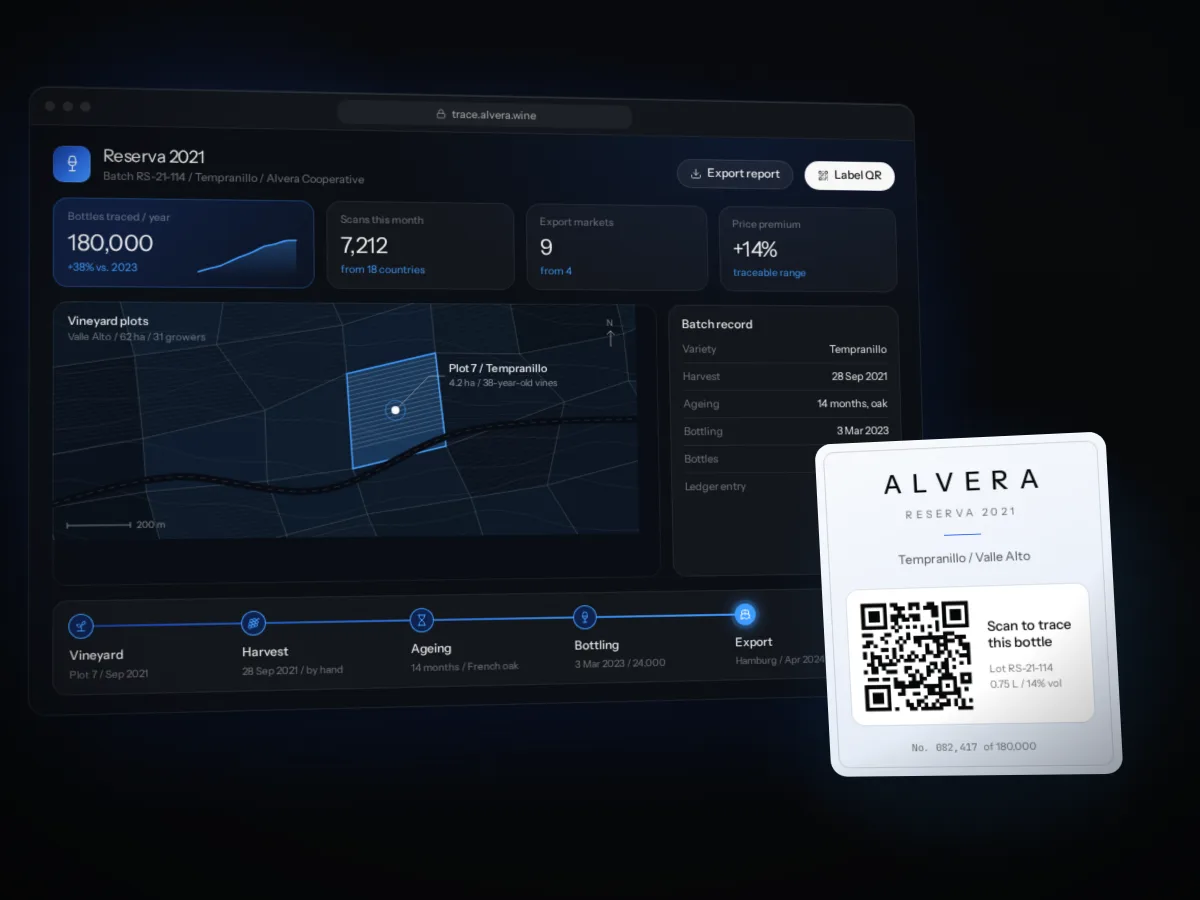
Situation and baseline
A small producer sells through importers and specialist retailers, while origin, lot and tasting details sit in spreadsheets and print collateral. Each export market adds evidence and labelling requirements.
The challenge
Make traceability useful without turning a marketing claim into an unverifiable guarantee or exposing sensitive supply-chain details.
Approach and timeline
Diagnose
Define claims requiring evidence, data owners and customer-visible fields; distinguish recorded facts from producer narrative.
Design
Model lot identifiers, harvest and production records, then test the link from package code to maintained source data.
Integrate
Create a fast multilingual QR destination with provenance, producer context and explicit limits on what is verified.
Learn and refine
Test scans and upkeep on a limited run, collect partner feedback and review each market's labelling rules.
Agents, automations and stack
A provenance service resolves bottle or lot identifiers to approved records. An assistant may draft translations from verified fields for human approval. A tamper-evident ledger is considered only when partner trust requires it; a blockchain cannot make inaccurate inputs true.
Deliverables
- Claims and evidence register
- Lot-to-bottle model, multilingual QR experience and correction process
Outcome indicators
- Bottles with verified records
Baseline: — Target: 180,000
- Product-page QR visits
Baseline: — Target: 7,200
- Markets with compliant labels
Baseline: 4 Target: 9
- Observed price premium
Baseline: — Target: +14%
How we measure
Verified bottles have complete, reviewed records. QR visits are unique sessions with bot filtering disclosed. Markets mean compliant live distribution, not leads. A price premium needs like-for-like net prices over a defined period and cannot be attributed to traceability without a comparison design.
Risks and guardrails
Publish only substantiated records, show update dates and limits, protect supplier identities where needed, and review privacy, labelling and alcohol-promotion rules per market.
What comes next
Review a full vintage and distribution cycle, measure partner adoption and customer understanding, and expand only if record upkeep remains reliable.